

Views: 0 Author: Site Editor Publish Time: 2026-04-27 Origin: Site


Pet stores today face a brutal retail reality. Big-box chains and online competitors keep squeezing profits on standard pet goods, forcing small retailers into destructive price competition with little room to grow. However, consumer trends have shifted sharply: pet humanization now drives purchasing decisions, and modern pet owners treat their cats as family members. They no longer settle for ugly, low-quality carpeted cat trees; instead, they actively shop for designer pet furniture that matches home decor, lasts for years, and delivers real value — and they are willing to pay a solid premium for quality and style.
This practical guide helps pet store owners and retail buyers tap into this high-margin opportunity. We cover how to evaluate, source, and merchandise designer cat trees to boost profits, maximize in-store sales per square foot, and avoid pointless price wars.
Replacing traditional carpeted models with a luxury cat tree increases gross profit per square foot without requiring additional retail floor space.
Selecting the right cat tree manufacturer involves auditing their material sourcing, stability testing, and wholesale fulfillment capabilities.
Offering a custom cat tree or exclusive white-label design protects retailers from direct price comparison shopping.
Successful implementation requires balancing flat-pack inventory efficiency with high-quality, assembled showroom displays.
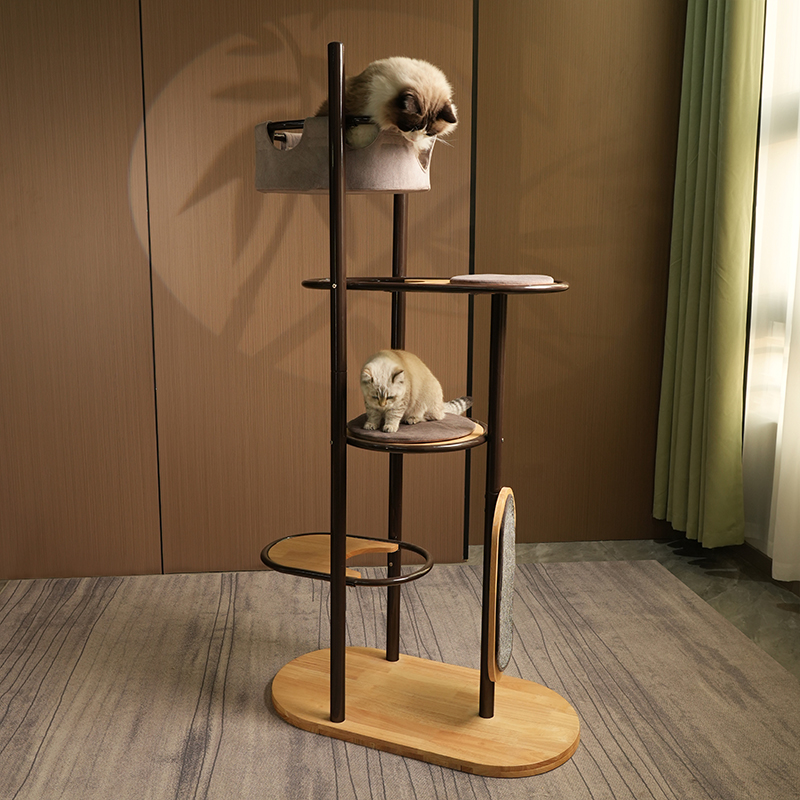
Retail floor space is your most valuable asset — every product you stock needs to deliver strong returns. Traditional bulky carpeted cat trees waste huge shelf space but bring almost no profit. They face endless online price undercutting, leading to customers browsing in-store then buying cheaper online.Today’s shoppers want pet pieces that double as home decor. Designer cat trees built with solid wood and glass fit modern interiors perfectly, with clean lines, natural textures, and easy-clean surfaces. These upgrades let you set higher retail prices, hit 40–60% healthy gross margins, and push up average order value far beyond cheap basic pet supplies.
Pet retailers have two practical sourcing paths for designer cat trees.Ready-made wholesale lines let you start fast with proven sell-through products, but margins are tighter and customers can still price-check online.Custom white-label exclusive lines give you full pricing control and unique products no one else sells, unlocking the highest profit potential. Trusted manufacturers like Yugie, a professional high-end pet furniture factory with strong production and custom design capabilities, support tailored OEM/ODM solutions for retailers looking to build exclusive product lines and stand out in the market.Small boutique stores suit pre-made wholesale stock; larger retail brands and multi-store operations gain the most from custom exclusive designs.
Your manufacturer partner directly decides your product quality, return rate, and long-term profit.
Material quality & safety
Avoid cheap particle board and toxic glue. Focus on suppliers that use premium solid wood, safe glass accessories, pet-friendly sealants, and durable natural sisal. Good materials mean fewer returns, happier customers, and easier premium sales.
Structural stability & durability
Designer cat trees must be sturdy enough for all cat breeds without wobbling. Stable engineering protects your brand reputation and cuts after-sales trouble.
Packaging & shipping practicality
Flat-pack modular packaging is essential. Compact packaging lowers freight costs, reduces warehouse storage pressure, and prevents transit damage — two critical factors for protecting your net margins.
Cheap cat trees look low-cost upfront, but they carry hidden losses: high transit damage, frequent returns, short product lifespan, and bad reviews.Designer solid wood and glass cat trees have higher unit cost initially, but strong markup margins, low damage rates, and long product life greatly reduce your total operating cost, delivering far better long-term ROI for your pet store.
Avoid showrooming risks by offering in-store exclusive styles and added services like local delivery and professional assembly — perks online sellers cannot match.Keep a small number of assembled display units to showcase premium texture and stability, and use flat-pack inventory for restocking to save warehouse space.Train your team to sell material quality, home aesthetics, and cat comfort, not just price.Place displays with other high-end pet products to build a premium shopping atmosphere.
Upgrading to designer cat trees is the smartest strategic move for pet stores to escape price wars and grow stable high profits. Modern customers want stylish, durable, home-friendly pet furniture — and they will pay more for better quality.Start by shortlisting qualified manufacturers, testing product samples for material finish and stability, and calculating your current profit baseline. Upgrade your cat tree category now to capture the growing premium pet furniture market.
A: Pet stores typically target 40–60% gross margin on premium designer models. Higher markup covers in-store display costs and delivers healthy net profit.
A: Wood-based furniture carries freight costs, but flat-pack packaging greatly reduces dimensional shipping fees and transit damage, protecting your final margins.
A: Yes. Added local delivery and assembly beat online competition, reduce customer hassle, and boost overall order value.
A: Stay away from thin cardboard, low-grade particle board, and toxic glue. Always choose solid wood, safe glass, and natural sisal for long-term quality and safety.


