

Views: 0 Author: Site Editor Publish Time: 2026-10-01 Origin: Site


OEM cat tree development moves through a concept brief, design and engineering, prototype sampling, revisions, production preparation and bulk manufacture. Each phase resolves a different question: what the brand needs, how the structure can be built, whether the sample works, and how that result can be reproduced across an order.
For pet brands and importers, the process includes assembly and export packing from the start. A good-looking prototype still needs production-ready materials, consistent components and a workable delivery plan. The cat furniture discussed here is intended for indoor use and is not suitable for outdoor use.
How an OEM cat tree moves toward bulk manufacture | ||
Stage | What happens | Buyer contribution |
|---|---|---|
1. Concept brief | Define the product, channel and commercial constraints. | Supply design references, intended market and quantity. |
2. Design and engineering | Turn the concept into dimensions, components and assembly details. | Set priorities and review the proposed arrangement. |
3. Prototype sampling | Make a physical unit to examine structure, finish and assembly. | Evaluate the sample against the agreed design. |
4. Revision and confirmation | Resolve changes and settle the production version. | Confirm product details, branding and packing. |
5. Production preparation | Prepare component methods, materials and checks for the order. | Agree the first-batch review and change process. |
6. Mass production | Make and inspect the batch, then pack for shipment. | Review agreed inspection and delivery information. |
These phases can overlap. Carton design, for example, should begin while assembly is being developed. A structural change during sampling can send the project back to engineering; it should also trigger a fresh look at packing and cost.
Begin with the role the product will play in the range. A compact tree for independent boutiques has different display and carton constraints from a taller model for an online collection. Define the intended climbing, scratching and resting layout, the brand appearance and the target channel before asking for a prototype.
Product direction: sketches or reference images, overall size targets and required functions.
Brand direction: colors, finishes, logo placement and the visual relationship to existing products.
Commercial direction: estimated quantity per model, target cost range, sales channel and destination country.
Delivery direction: launch date, assembly preference, packaging style and any channel-specific labeling needs.
A cat tree manufacturer then needs to translate that brief into buildable parts. Ask the design team to work through platform positions, supporting posts, joints, hardware access and the assembly order. Drawings should identify dimensions and the components that connect. Material choices also affect cutting, finishing and joining, so the quotation should describe the proposed construction.
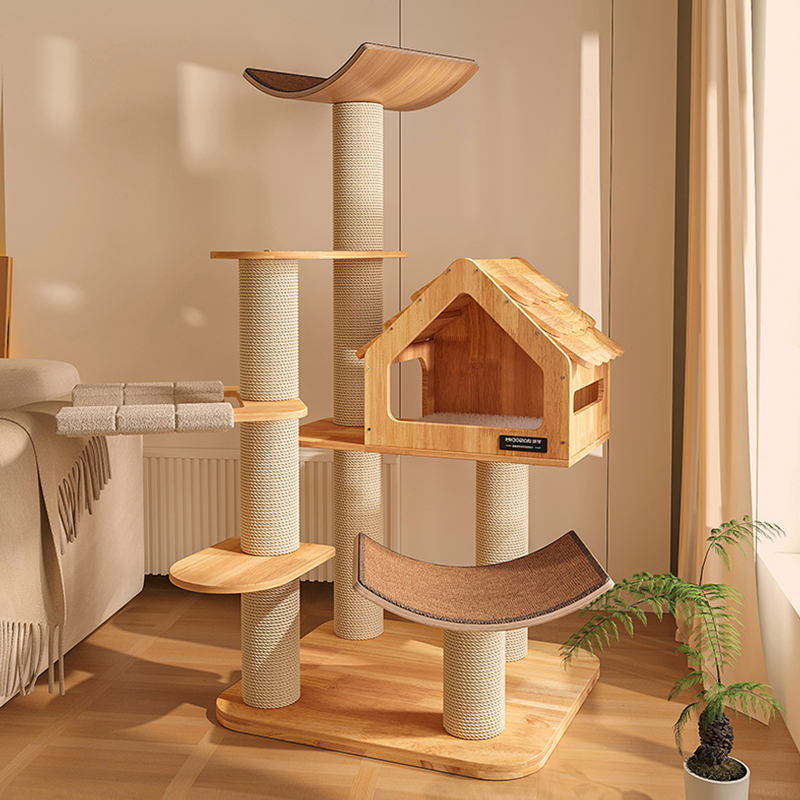
Forest Series cat tree with wood platforms, rope-wrapped posts and a raised wooden house.
Consider an illustrative request to make the top resting platform higher. Increasing the height changes the relationship between the platform, supporting post and base.
The manufacturer needs to assess the structure, connection details and intended-use tests, rather than simply lengthen a post. The buyer should also consider whether the taller version changes showroom fit, assembly access or the packed dimensions.
Destination requirements belong in this discussion too. The US EPA identifies hardwood plywood, MDF and particleboard among regulated composite-wood products. For a US-bound design containing relevant panels, ask which current documentation and labeling requirements apply to that construction. Settle this with the manufacturer and appropriate compliance specialists before purchasing materials.
The prototype makes the design tangible. A brand team can see the proportions and finish, assemble the unit, and compare the climbing and resting arrangement with the intended concept. Ask which components and construction methods will also be used in bulk production, since temporary sample parts can disguise later differences.
Yugie’s solid-wood cat trees may combine rubberwood, plywood, paper columns and sisal rope. Its metal cat trees use carbon steel, solid wood and fabric.
Review each material where it appears: visible wood surfaces, panel edges, post wrapping, fabric fit and the hardware connecting them. A custom cat tree specification should identify the actual mix rather than rely on a broad material label.
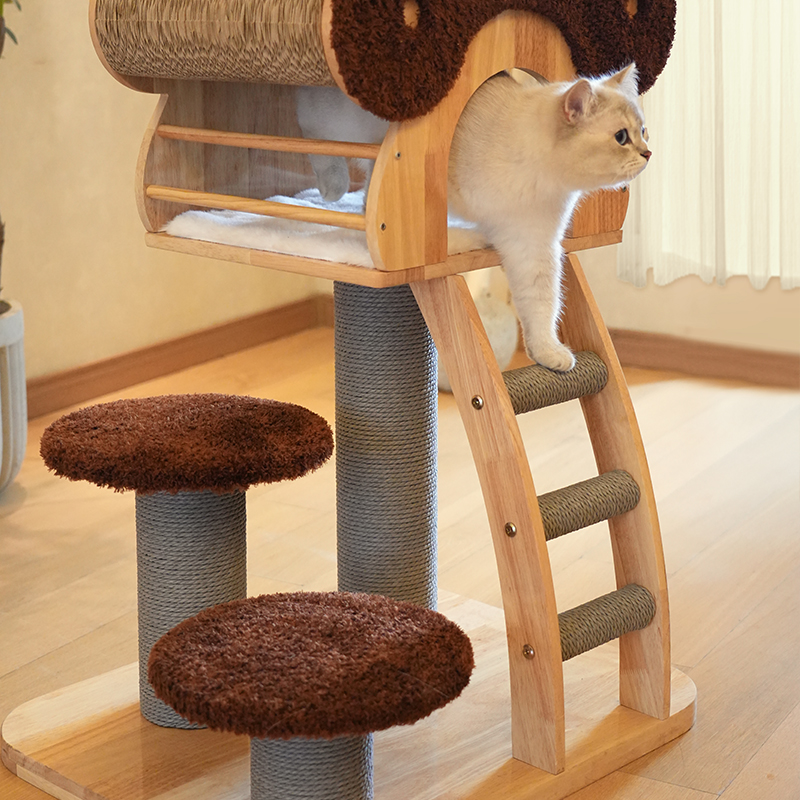
Mushroom cat tree detail showing ladder fixings, wrapped rungs and fabric-covered resting platforms.
Agree how the manufacturer will evaluate stability, connections and intended-use performance for the proposed design. Have a person unfamiliar with the assembly try the instructions and identify unclear steps or awkward hardware access. Appearance review and structural evaluation answer different questions; a photograph alone cannot establish both.
Group sample feedback around the parts that need to change. In the higher-platform example, a revised support or joint can also change hardware, assembly instructions and the carton insert. Ask to see the revised physical arrangement and the affected details together.
Before bulk manufacture, settle the dimensions, component materials and finish reference.
Finalize the accessories, branding, assembly instructions and packing together.
Keep an agreed sample alongside the written specifications to guide later comparisons.
Mass production requires the same fit and finish to emerge from routine operations. A sample maker can adjust one unit by hand; that does not establish whether components from a full batch will fit together consistently. Discuss how the pet furniture manufacturer will prepare cutting, drilling, wrapping, finishing and assembly for the agreed design.
Prepare the component methods. Ask how hole positions, part dimensions, finish references and hardware sets will be kept consistent during manufacture.
Confirm incoming materials. Match ordered components to the agreed construction, and discuss how any unavailable material or proposed substitute will be handled.
Compare the first production units. Assemble units made through the intended production methods and compare fit, appearance and packing with the agreed sample.
Continue checks through the batch. Set inspection points for component fit, surface finish, post wrapping, accessories and the packed unit, using criteria appropriate to the model.
Yugie describes woodworking, metal-processing and upholstery machinery, with inspections across production stages. Its customization process includes design proposals, sampling, adjustments, bulk manufacturing and delivery. These capabilities provide a basis for discussing the work needed for a particular order; buyers should still confirm available production capacity and the schedule for their model.
For a range extension, reviewing a designer cat tree with an existing structure can help identify which parts can stay consistent and which require development.
When comparing a new design with a standard model, separate an appearance change from a change to supporting parts. An established component does not remove the need to evaluate the complete new arrangement.
Build the calendar around separate periods for design, sample manufacture, buyer evaluation, revisions, material preparation, bulk production and transport. Branded artwork, channel labels and destination documents can add work even after the structure is settled.
Production estimate: Yugie’s guidance is typically 30–45 days, depending on order quantity and customization. This is not a complete concept-to-delivery promise; ask when the production period starts and which inputs must be settled first.
Launch allowance: plan separately for transit and destination handling. Repeat orders of standard models may have shorter production lead times.
Quantity per model: MOQ for standard Yugie products generally starts at 30–50 pieces per model. Custom items may require higher quantities depending on materials and complexity. For wholesale cat furniture, discuss each model’s quantity and whether colors, special components or branded packaging change the order requirements.
Packaging format: Yugie offers export cartons, retail color boxes, custom brand packaging and protective packaging for Amazon FBA shipments. Select the format for the actual product and route; disassembly, protective inserts and carton size affect delivery.
Component protection: for a knock-down tree, ask how hardware is separated from finished surfaces and how parts are identified for assembly. Have packing evaluated for the planned transport conditions before shipment.
Delivery terms: Yugie can discuss EXW, FOB, CIF or DDP according to the order and destination. Agree the delivery terms, booked transport and document responsibilities with the cat furniture supplier.
Yes. Yugie accepts a concept or drawing as a starting point and offers concept sketches or 3D models during design development. Reference images should be accompanied by size targets, required functions and brand preferences so the team can develop a clear proposal.
Yugie states that sample fees can be refunded or deducted after a bulk order. Confirm the applicable order, amount and credit conditions before commissioning the sample.
Yes, Yugie offers customization for both product families. Cat villas generally use rubberwood, plywood, tempered glass and carbon steel. Coordinate finishes and branding across the range, while developing the structure, assembly and packing for each model separately.
No. Yugie says exclusive projects can be discussed through patents or exclusive agreements. Agree the covered design, permitted use, markets and commercial terms explicitly; customization alone does not establish ownership or worldwide protection.
Ask about assembly assistance, replacement parts, claim evidence and remedy costs. Yugie offers free replacement for confirmed quality issues and replacement or compensation for confirmed transit damage. Confirm the claim scope, freight responsibility and handling arrangements in the commercial terms.
Start with a clear product brief and use each development phase to settle the physical details needed by the next. For an OEM project, the most useful early discussion combines the design direction, quantity per model, intended channel and destination.
Yugie’s customization services can help define that starting scope; contact the development team with those details to discuss the next step.
Prepare the reference images, size targets and packaging needs together before the first design discussion.


