

Views: 0 Author: Site Editor Publish Time: 2026-08-28 Origin: Site


Sourcing standard cat furniture for multi-cat households presents significant commercial risks for modern pet retailers and wholesale brands. Conventional lightweight cat trees commonly suffer structural failure under compound dynamic pressure, triggering high return rates and negative consumer reviews. Modern terminal consumers prioritize long-term durability and absolute pet safety when purchasing multi-pet furniture. Balancing high-end aesthetic design and heavy-duty structural performance has become a core sourcing challenge for B2B procurement teams. Qualified inventory must withstand continuous dynamic physical loads while keeping pace with contemporary home decor trends. Neglecting professional structural standards leads to frequent product replacements, pet safety incidents, and irreversible brand reputation losses. This guide establishes an evidence-based professional evaluation framework for B2B buyers, wholesalers, and pet brand operators, covering spatial layout rationality, material safety compliance, and factory testing verification standards. It delivers systematic procurement methods to screen high-quality inventory that integrates industrial-grade structural engineering and premium visual design.
Stability is Quantifiable: Multi-cat trees require specific base-to-height weight ratios and dynamic load testing to withstand simultaneous jumping.
Territorial Design: A functional designer cat tree must incorporate equal-height resting platforms to prevent behavioral conflicts among cats.
Material Compliance Matters: Adhesives and structural boards must meet regional toxicity standards (e.g., CARB Phase 2, REACH) to mitigate retailer liability.
Supplier Capabilities: Effective B2B procurement hinges on a factory’s ability to provide transparent testing data, optimized shipping packaging, and scalable OEM/ODM options.
Standard cat furniture frequently fails in multi-cat households. The core issue stems from dynamic load overlap. When one cat jumps, it generates kinetic energy. When multiple 10 to 15-pound cats jump or wrestle simultaneously, this energy compounds rapidly. They create immense lateral and downward force. Lightweight frames simply cannot absorb this overlapping kinetic shock. They sway, vibrate, and eventually destabilize entirely.
Terminal consumer feedback fully exposes these structural defects, with widespread negative reviews across social platforms and pet communities. Standard low-end products show centralized failure characteristics in multi-cat scenarios: unstable lightweight bases cause persistent structural shaking and trigger pet panic; low-strength sisal support columns easily fracture under long-term high-intensity friction and impact; single top-platform design leads to fierce pet territorial competition and daily aggressive conflicts.
These product quality defects directly damage wholesale and retail operational benefits. Flimsy non-standard construction brings multi-dimensional commercial losses. It triggers a sharp increase in after-sales service tickets and full refund demands due to short-term product damage. High return shipping costs of oversized pet furniture severely compress retail profit margins. Continuous negative user feedback leads to long-term brand value depreciation and weakened market competitiveness. Professional procurement of multi-cat-scenario exclusive structural designs is essential to avoid cascading operational risks.
Assuming weight capacity scales linearly without testing lateral force limits.
Ignoring the vibrational sway caused by hollow plastic pillars.
Sourcing towers with narrow bases to save on packaging dimensions.
Relying solely on visual appeal while neglecting joint reinforcement.
Scientific spatial layout design determines the practicality and terminal reputation of multi-cat cat trees. Equal-height multi-platform configuration is an indispensable core standard. Pet group hierarchy judgment relies heavily on vertical height advantages. Single high-platform structures inevitably trigger frequent territorial scrambling and aggressive conflicts. Multiple parallel top-tier platforms and widened perches allow multiple pets to rest and coexist peacefully, fitting the behavioral habits of bonded pet groups. Procurement teams need to focus on evaluating the total effective usable area of high-level platforms.
Reasonable clearance design and multi-directional escape routes are key to avoiding pet conflicts. Multi-cat peaceful coexistence requires unobstructed structural movement paths. Fully enclosed single-entry condos must be completely avoided, as dominant pets can easily trap submissive individuals, causing panic stress and territorial aggression. High-quality retail-grade products adopt dual-entry and multi-directional outlet designs for enclosed rest spaces to ensure safe pet movement.
Integrating these heavy-duty spatial requirements into modern aesthetics requires careful evaluation. Modern consumers pursue both product robustness and home decoration compatibility, rejecting bulky, outdated fully carpeted products. Qualified manufacturers optimize structural volume through process upgrading and material iteration. A premium Designer Cat Tree effectively blends solid wood finishes into modern homes seamlessly. It utilizes modular components and neutral fabrics. However, it never sacrifices the essential surface area required for multiple pets. Look for suppliers who use sleek metal frames or reinforced engineered wood to maintain a slim visual profile while maximizing structural strength.
Count the top-level platforms to ensure equal resting opportunities.
Measure condo openings to verify dual exit paths exist.
Check step distances to ensure older or heavier cats can navigate easily.
Assess the visual footprint to confirm it aligns with modern home decor trends.
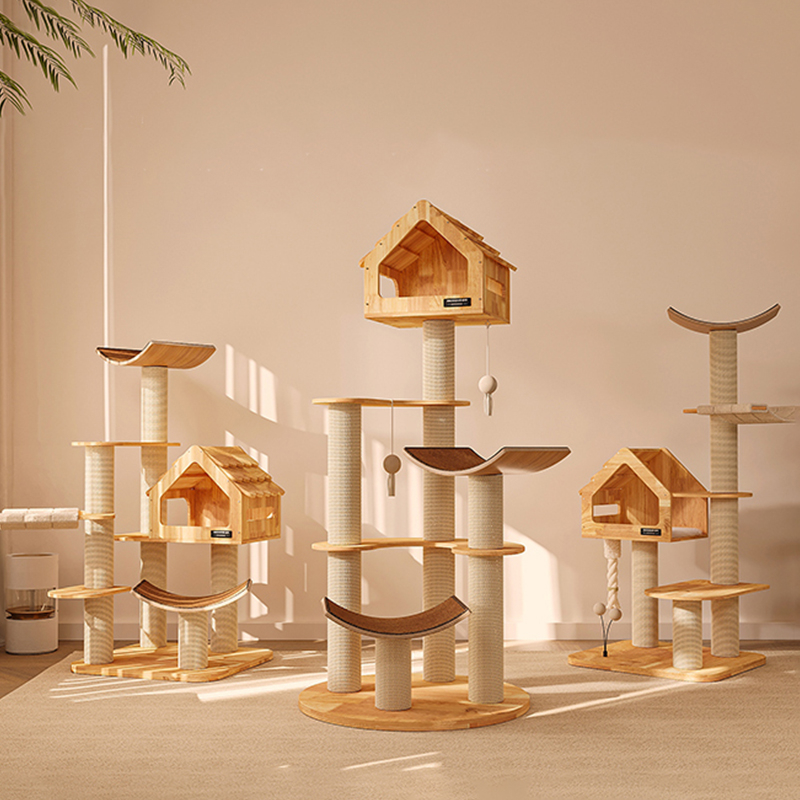
Base weight and center of gravity define product safety. The base must anchor a multi-cat load securely. It should account for a significant percentage of the total unit weight. A heavy top section demands a massive, dense base plate to prevent tipping. We advise checking the exact width-to-height ratio. Tall units require substantially widened bases to lower the center of gravity effectively.
Support pillar diameter and hardware configuration standards are key anti-sway indicators. Ordinary PVC pipes and thin cardboard support tubes cannot withstand long-term lateral stress and are prone to deformation and fracture. Premium products adopt wide-diameter reinforced solid support columns, matched with high-shear-strength metal mounting hardware to replace low-grade plastic embedded parts. Thickened high-density sisal columns serve as both scratching functional surfaces and main load-bearing structures, effectively solving the common structural swaying problem of mass-market products.
B2B procurement decisions must be based on factory professional test data rather than subjective product descriptions. Qualified cooperative manufacturers provide complete standardized stability test reports. Professional tilt-angle tests prove structural stability under inclined pressure; simulated multi-cat sandbag drop tests verify impact resistance under superimposed landing pressure; long-term cyclic vibration tests confirm the durability of structural joints and hardware accessories.
Table: Stability Validation Checkpoints
Test Category | Factory Validation Method | Acceptable Standard for Multi-Cat Use |
|---|---|---|
Static Tilt Resistance | Incline platform testing | Maintains stability at a 10 to 15-degree tilt angle. |
Dynamic Drop Impact | Sandbag drop from 3 feet | Zero hardware loosening or pillar fracturing. |
Center of Gravity | Weight distribution analysis | Base accounts for at least 30-40% of total unit mass. |
Joint Shear Strength | Lateral force application | Steel hardware holds firm without stripping wood threads. |
Substrate and adhesive safety compliance is a core risk prevention point for B2B retail operations. Inferior low-cost adhesives and unqualified particleboard release excessive VOC and formaldehyde, causing long-term indoor air pollution. Pets have sensitive respiratory systems and stay on furniture for extended periods, making product environmental safety particularly critical. Different regional markets have mandatory certification requirements: the US market requires strict CARB Phase 2 or EPA TSCA Title VI compliance, while European sales must meet REACH environmental protection standards. Complete compliance certificate verification effectively avoids retailer legal risks and reputational crises.
Wear resistance of scratching surfaces determines the overall service life of multi-cat furniture. Ordinary twisted sisal rope is prone to strand breakage and overall unraveling under frequent multi-pet scratching friction. Upgraded woven sisal mats and heavy-duty jute materials feature integrated structural advantages, with local wear not causing overall failure. This high durability reduces terminal replacement frequency, improves consumer satisfaction, and lowers brand after-sales pressure.
Fabric durability and maintenance options strongly influence consumer purchasing decisions. Evaluate washable, removable cushions versus traditional glued-down carpet. Glued carpet traps fur, dander, and vomit permanently. It looks terrible after six months of multi-cat use. Conversely, removable parts extend the product lifecycle significantly. Washable beds offer a highly compelling consumer selling point. They keep the furniture sanitary and maintain the premium aesthetic over years of heavy use.
Verify CARB Phase 2 / TSCA Title VI certificates for all wood composites.
Ensure adhesives are non-toxic and pet-safe.
Specify woven sisal or heavy jute over standard twisted rope.
Prioritize velcro-attached or snap-on fabrics for easy machine washing.
Flexible MOQ policies reduce market trial risks for new products. Oversized multi-cat pet furniture occupies large inventory and capital space. Reliable manufacturers support low-quantity trial orders and flexible MOQ adjustment mechanisms, allowing brands to verify local market feedback before large-batch container procurement, avoiding overstock risks.
Professional flat-pack packaging optimization directly improves wholesale profit margins. Multi-cat integrated cat trees have large original volumes, resulting in high dimensional weight logistics costs. Factories with mature structural design capabilities optimize disassembly and packaging solutions, compress box volume scientifically, and maximize pallet loading space. Optimized packaging design effectively reduces international ocean freight and last-mile delivery costs, creating greater profit space for retailers.
Powerful OEM/ODM customization capabilities support brand long-term iteration and market differentiation. Excellent cooperative factories provide modular product templates, supporting personalized dimension adjustment, material upgrading, fabric replacement, and brand logo customization. Flexible customization mechanisms avoid high mold development fees, meeting brands’ exclusive product positioning and differentiated market development needs.
Strict pre-shipment QC inspection mechanisms guarantee batch product stability. Standardized supplier inspection clauses cover multiple core links: full hardware quantity inspection to prevent missing accessories and terminal returns; wood moisture content detection to control humidity below the safe threshold and avoid mildew and deformation during long-distance transportation; random sample assembly tests to verify hole position accuracy and assembly fluency; ISTA standard drop tests for packaging to ensure intact product delivery.
Hardware Audits: Require a 5% random sampling to verify exact bolt and hex key counts.
Moisture Limits: Enforce strict wood moisture limits (typically under 12%) to prevent transit mold.
Assembly Verification: Factory workers must fully assemble random units to test hole alignments.
Drop Test Packaging: Ensure shipping cartons pass standard ISTA drop tests to survive e-commerce transit.
Multi-cat household pet furniture sourcing takes structural engineering performance as the core standard and aesthetic design as the auxiliary advantage. Procurement teams must prioritize dynamic load resistance, balanced territorial spatial layout, and strict material safety compliance. Premium decorative value only delivers commercial value on the premise of stable long-term structural performance. Insufficient stability test data and unqualified material standards will inevitably increase after-sales return rates and damage brand market trust.
Pet brand operators and procurement teams are advised to re-audit existing supplier resources against the above multi-cat exclusive standards. Recheck material environmental compliance certificates and packaging freight efficiency data. Screen out unqualified suppliers that cannot provide standardized stability test verification reports.
Professional supply chain management protects long-term brand profits and terminal consumer satisfaction. Procurement teams can apply for updated wholesale product catalogs and latest structural stability test reports from formal manufacturers, and launch OEM customized engineering communication to develop exclusive multi-cat high-performance products matching brand positioning.
A: A unit over 60 inches tall requires a substantially widened base to prevent tipping. The standard width-to-height ratio demands the base width be at least 40-50% of the total height. Additionally, the base should account for roughly 30% of the unit's total weight to anchor dynamic loads effectively.
A: Yes, but it depends strictly on the materials used. It must utilize solid wood or high-density engineered wood rather than hollow plastic or thin cardboard. It also requires widened perch dimensions and heavy-duty steel hardware. Aesthetics alone cannot support a 20-pound Maine Coon.
A: Quality factories utilize dynamic load testing. They perform static tilt tests, ensuring the unit remains upright at a 10 to 15-degree incline. They also execute weighted sandbag drop tests from specific heights to simulate multiple cats landing simultaneously, verifying joint and pillar strength.
A: High-quality wholesale packaging needs three core advantages: reinforced corner protection and thickened cartons to avoid transit damage; independent vacuum-sealed hardware kits to eliminate missing parts; scientifically optimized box dimensions to maximize pallet utilization and reduce overall dimensional freight costs.
A:Yes. Yugie works with many international pet brands to create exclusive product lines. Our design team regularly develops new concepts, and we can also protect unique designs through patents or exclusive agreements.


