

Views: 0 Author: Site Editor Publish Time: 2026-08-18 Origin: Site


High-ticket pet furniture buyers consistently expect premium durability from their purchases. For B2B retailers and OEM buyers, post-purchase maintenance issues directly translate to return rates. They also increase customer support overhead and heavily damage brand reputation. While standard cat furniture is often treated as disposable, a true Designer Cat Tree is an investment piece. Educating end-users on routine maintenance is critical for B2B clients’ retail operation stability and brand sustainable development. Selecting a reliable manufacturing partner focused on product longevity and standardized production makes a massive difference for wholesale and OEM cooperation. This guide breaks down the essential maintenance protocols for premium cat furniture. We provide a practical framework to help B2B purchasers properly evaluate product quality and reduce post-sale friction. Business procurement teams will discover actionable steps to select a highly reliable B2B supplier with mature manufacturing and supply chain capabilities today.
Proactive maintenance education reduces product return rates and increases customer lifetime value (CLV) for pet retailers.
Sourcing designer cat trees with modular, replaceable parts (like detachable sisal posts and washable cushions) is a critical safeguard against inventory obsolescence.
Regular hardware checks and fabric care are essential to mitigate liability risks associated with structural instability.
Evaluating a supplier’s quality assurance (QA) and replacement part scalability is a mandatory step in the B2B procurement process.
Framing the problem requires looking at actual consumer behavior. High return rates in the pet furniture sector cause major headaches. Customers rarely return items due to immediate manufacturer defects. Instead, they return products experiencing rapid, premature wear. Frayed sisal ropes and wobbly bases ruin the customer experience quickly. Retailers bear the financial burden of these late-stage returns. Lost outbound shipping costs, depleted inventory value, and damaged consumer trust directly erode profitability. Returning bulky furniture destroys profit margins instantly.
Success criteria for procurement teams must evolve immediately. Pet businesses must thoughtfully source high-quality products. They need designs looking aesthetically pleasing inside a modern home. Consumers refuse to place ugly, carpeted towers in their living rooms. However, beauty alone cannot sustain a successful product line. These structures must withstand predictable cat behavior over several years. Durability matters far more than short-term visual appeal. A high-end Designer Cat Tree must endure aggressive scratching, heavy jumping, and daily lounging.
Customer expectation versus reality creates a dangerous business trap. Premium price points always require premium longevity. Retailers must actively bridge the gap between expectations and reality. Supplying clear, actionable care instructions helps manage these customer expectations effectively. These instructions highlight the durable construction and thoughtful engineering. They also shift some maintenance responsibility to the end-user. We recommend placing a detailed maintenance card inside every packaging carton viastandardized factory packaging procedures. This proactive approach helps businesses reduce massive volumes of preventable refund requests. It builds long-term market confidence in retailers’ private label brands and stabilizes B2B cooperative relationships.
Premium Furniture Procurement Metrics
Category | Expected Lifespan | Common Failure Risks | Retailer Action Step |
|---|---|---|---|
Standard Units | 6 to 12 months | Stripped screws, torn carpet | Prepare for high return volume |
Premium Units | 3 to 5 years | Loosened bolts, soiled fabric | Provide maintenance checklists |
Modular Systems | 5+ years | Worn sisal posts | Sell replacement components |
Solid wood versus high-density engineered wood requires careful analysis. Material choice dictates long-term structural integrity. Our factory adopts high-quality solid wood + glass composite structure for high-end designer cat trees, distinguishing it from ordinary market products. Solid wood offers incredible strength and stunning aesthetic appeal. It handles heavy cats easily without bowing or snapping. High-density engineered wood provides excellent moisture resistance and better cost efficiency. Both materials significantly outperform cheap particle board options. B2B purchasers must strictly evaluate weight distribution and moisture resistance during procurement, which are core indicators of supplier production quality control.
Hardware quality requires incredibly close inspection. Reliable pet furniture manufacturers always adopt standardized production processes with countersunk steel screws during factory mass production. Threaded metal inserts provide far superior holding power over time. Many low-end manufacturers often use direct wood screws to save pennies per unit. Direct screws strip out entirely after just a few months. Loose screws create dangerous tipping hazards for large, active cats, while our standardized manufacturing process effectively helps reduce stability-related complaints and after-sales risks for B2B partners.
Scratching surfaces take severe abuse on a daily basis. B2B buyers must thoroughly evaluate sisal rope grade during supplier audits. Natural, untreated sisal rope performs best for pet health. Avoid synthetic sisal carpets glued directly to the main support beams. Material density directly impacts shredding speed and visual degradation. High-density industrial winding technology adopted by professional factories keeps the rope intact much longer. Loose winding looks terrible and causes immediate buyer regret, bringing unnecessary after-sales pressure for retailers.
Upholstery and fabric choices define ultimate cleanliness. Machine-washable, removable covers are absolutely essential for premium models. We highly recommend boucle, velvet, or heavy-duty canvas materials. Businesses should avoid glued-down plush fabrics entirely. Fixed fabrics trap odors, dirt, and harmful bacteria permanently. Removable covers allow end-users to maintain a fresh, clean living environment. This practical functional design optimizes the in-store display and terminal sales performance of designer cat trees, helping pet businesses enhance product competitiveness.
Procurement teams should request exact material density specifications from manufacturing partners.
Test all threaded metal inserts for dangerous cross-threading vulnerabilities during supplier quality audits.
Verify fabric colorfastness using a standard industry wash test before bulk procurement.
Inspect the adhesive quality binding the sisal to the columns to ensure long-term structural stability.
Measure the base plate thickness to guarantee a low center of gravity and stable placement performance.
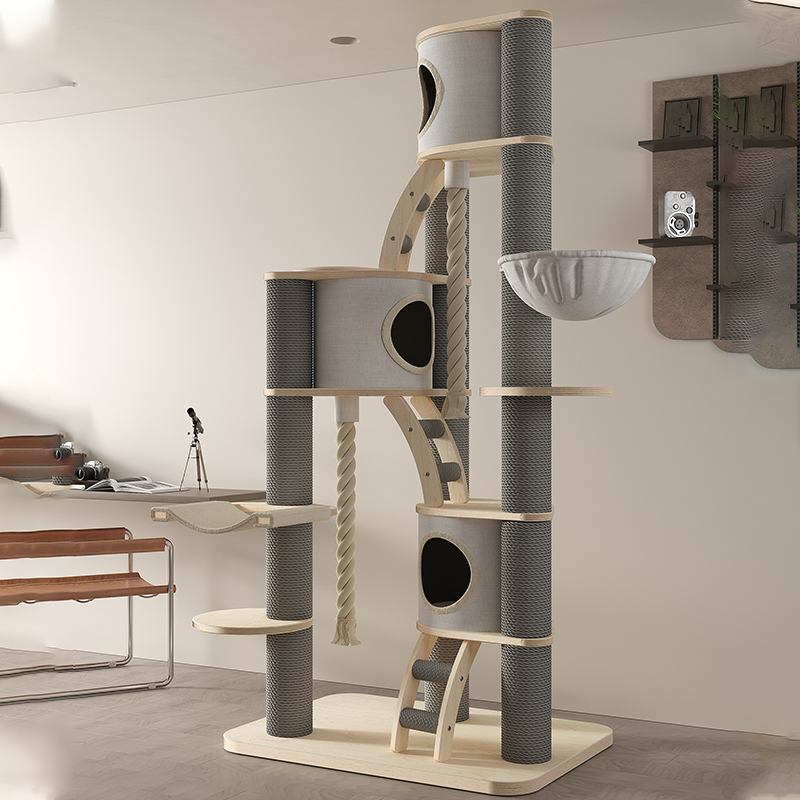
Content Node: Pet businesses can repurpose this precise checklist as a post-purchase insert. It reduces support tickets and enhances brand trust significantly.
Weekly Upkeep ensures optimal hygiene and lasting aesthetics. Consistent weekly cleaning keeps the furniture looking brand new. End-users should vacuum the fabric surfaces thoroughly every few days. Using a rubber squeegee effectively removes deeply embedded pet hair. Squeegees work much better than standard lint rollers for thick velvet. Customers must spot-clean minor stains immediately upon discovery. We advise using pet-safe, enzyme-based cleaners exclusively. Harsh chemicals destroy delicate fabric dyes very quickly. Enzyme cleaners break down biological messes safely and permanently. They neutralize unpleasant odors completely.
Monthly Checks guarantee continuous safety and structural stability. Safety audits prevent catastrophic structural failures over time.
Hardware Audit protocols are simple but highly necessary. Customers must inspect and re-tighten all visible bolts. Wood naturally expands and contracts during seasonal home humidity changes. Repetitive jumping impacts also loosen internal hardware gradually. Tightening screws takes two minutes but prevents major accidents.
Base Inspection routines keep the unit anchored properly. Users should ensure the foundational footprint remains completely flat. Uneven floors or warped bases create severe tipping hazards. A wobbly Designer Cat Tree scares cats away permanently.
Bi-Annual Deep Maintenance addresses natural wear and tear. Deep maintenance resets the product lifespan effectively. Users should rotate scratching posts if the specific design allows it. Cats typically scratch one specific side repeatedly. Rotating the post ensures even wear across the entire sisal surface. End-users must deep wash all removable fabric elements. They should always air-dry these covers to prevent unexpected shrinkage. Machine drying ruins custom-fitted boucle or canvas materials rapidly. A well-maintained unit builds immense brand loyalty for retail pet businesses.
Unzip all fabric covers carefully to avoid zipper snags.
Pre-treat any visible stains using a mild enzyme solution.
Wash covers on a gentle cycle using cold water.
Lay covers completely flat on a drying rack indoors.
Reinstall covers only when they are entirely dry.
The modularity advantage changes the entire retail game entirely. OEM buyers and retailers should aggressively prioritize modular designs. Individual components must be easily replaceable by average end-users. Posts, resting platforms, and soft cushions wear out at different rates. Throwing away an entire unit because of one ruined post is wasteful. Modularity protects B2B merchants against frustrating inventory obsolescence. Businesses only need to stock small replacement parts instead of massive finished product boxes. This greatly improves warehouse space utilization and optimizes wholesale inventory turnover efficiency.
Supporting and selling replacement parts creates a valuable secondary business dimension for pet retailers. Pet stores generate stable recurring revenue from these simple sales. A customer buying a replacement post stays engaged with the retail brand. This continuous relationship builds incredible repeat customer engagement. It converts one-time furniture purchasers into long-term loyal consumers, enriching the terminal sales system and profit structure of designer cat tree product lines.
Supply chain considerations require careful upfront planning and communication. B2B purchasers must ensure their manufacturing partner maintains strict, consistent production specifications. Our factory adopts unified tooling, drilling and assembly standards for mass production, with zero dimensional deviation between production batches. Replacement parts ordered years later can perfectly match the original equipment. A minor manufacturing variance ruins the modularity concept entirely. Professional suppliers will take the initiative to standardize all production processes to ensure stable product consistency and reliable after-sales matching services for global wholesale and OEM clients.
Procuring high-quality items demands a strict supplier evaluation framework.
Evaluation Dimension 1: Transparency in Materials. Reliable suppliers provide clear specifications on core wood density, fabric rub-counts and sisal sourcing data. Unreliable suppliers hide behind vague terms like "premium wood." B2B buyers should demand numerical data and verifiable lab test results. Transparency proves suppliers can effectively control their material supply chain. Professional manufacturers can provide complete fabric sourcing certifications and material inspection reports for wholesale and OEM cooperation.
Evaluation Dimension 2: Packaging and Assembly. Poor initial assembly guarantees early maintenance failures down the line. B2B purchasers need to evaluate the clarity of the supplier’s instruction manuals and the quality of supporting assembly tools. Flimsy accessories will lead to poor assembly experience and hidden structural risks. We adopt standardized carton packaging with shockproof and compression-resistant protection, supporting long-distance international logistics and reducing product damage during transit. Complete assembly guidance and high-quality supporting accessories ensure consistent product installation effects for end consumers.
Evaluation Dimension 3: Warranty and Defect Rates. Professional manufacturers have clear SLA standards for defective parts replacement and after-sales service. Qualified suppliers can provide authentic historical QA pass rate data and warranty claim records for client reference. Reliable B2B partners share operational data transparently, while secretive suppliers usually hide unstable product quality and high defect risks.
Next Steps for professional procurement teams are very clear. Never commit to a large wholesale order blindly. Reputable businesses request sample units first for comprehensive testing. Teams can perform aggressive, in-house stability and maintenance stress tests to simulate years of regular pet use within warehouse environments. OEM contracts should only be signed after sample products pass rigorous internal assessments. Testers should verify hardware flexibility and structural stability after heavy lateral pressure tests.
A Designer Cat Tree must marry aesthetic appeal with robust engineering. It must offer maintainable solutions for end consumers’ daily use scenarios. Proper maintenance always starts right at the procurement stage. Partnering with suppliers prioritizing modularity, standardized production and strict quality control protects B2B merchants’ long-term profit margins. Premium solid wood and glass materials, exquisite craftsmanship and scientific structural design also safeguard retailers’ valuable brand reputation in the high-end pet furniture market.
Our professional B2B team welcomes global business inquiries for physical sample requests, full modular product catalog browsing, and customized OEM manufacturing solutions. We focus on high-end solid wood and glass pet furniture production, delivering stable, long-lasting products for wholesale and brand cooperation worldwide.
A: Flat-pack modular design fully optimizes pallet space utilization for international wholesale shipments. This structure effectively reduces volumetric weight and overall freight costs for B2B bulk orders. Compared with pre-assembled bulky products, modular flat-pack products greatly improve container loading rate, cut down comprehensive logistics expenses, and bring more stable cost-control advantages for global distributors and retailers.
A: Proper maintenance extends the lifespan of high-quality units remarkably. End-users must tighten hardware and replace worn sisal posts occasionally. Under these conditions, commercial-grade units easily last over five years. They completely outperform standard glued-carpet alternatives found in big-box stores.
A: Yes, professional B2B pet furniture manufacturers support full customized material solutions for OEM orders. Clients can customize water-resistant, stain-proof and easy-to-clean upholstery, high-density anti-scratch sisal and other premium materials according to local market positioning. We support one-stop OEM customization from material selection, structural optimization to packaging design, meeting personalized market demands for global business partners.
A: Formal factory production adopts mechanical high-tension winding technology and eco-friendly high-strength adhesive to fix sisal ropes, effectively avoiding loose and shedding problems. Strict pre-shipment quality inspection helps reduce stability-related complaints from terminal customers. Meanwhile, supporting replaceable sisal post accessories allows retailers to solve user problems efficiently, while enriching terminal product service forms and improving customer stickiness.


