

Views: 0 Author: Site Editor Publish Time: 2026-07-02 Origin: Site


Balancing high-end home aesthetics against the reality of feline behavior creates a frustrating dilemma. Cats naturally scratch, shed, and occasionally have accidents. These behaviors easily destroy poorly made pet furniture. Modern indoor pet furniture needs to balance home aesthetics, feline behavior, and long-term product durability. Standard pet store towers quickly become torn, wobbly eyesores.
A true Luxury Cat Villa must offer much more than superficial visual appeal. It demands architectural stability, pet-safe material selection, secure glass-and-wood construction, and exceptional long-term durability. Baseline evaluation criteria should focus on three main pillars: structural integrity, material durability, and ease of maintenance.
This guide breaks down exactly what components matter most. The following sections explain how to evaluate framework materials, glass structure, scratching surfaces, hardware quality, packaging protection, and supplier capability. Understanding these details helps B2B buyers, retailers, wholesalers, and pet brands evaluate whether a Luxury Cat Villa can support long-term channel sales instead of becoming another short-lifecycle product.
Core Structure: Premium solid rubberwood and reinforced low-formaldehyde multi-layer plywood drastically outperform standard MDF and particle board in load-bearing capacity, moisture resistance and structural stability, matched with thickened anti-rust carbon steel load-bearing frames.
Upholstery & Surfaces: Tight-weave, snag-proof fabrics, replaceable natural sisal & kraft scratching panels, and polished high-strength tempered glass are non-negotiable for long-term service life.
Safety & Compliance: Enclosed cat villas require low-VOC water-based finishes, rounded polished tempered glass edges, and anti-loose assembled structure to eliminate pet injury and toxic off-gassing risks.
Longevity Standard: Qualified premium cat furniture features modular bolt-assembled designs with fully replaceable scratching and lounging components, plus anti-toppling integral structural design.
Many modern pet brands focus solely on visual appeal. They design products to look spectacular on social media feeds. Unfortunately, they ignore the brutal reality of daily pet use. This "fast furniture" approach creates massive failure rates across the industry.
Mass-market cat trees rely on cheap construction methods to keep profit margins high. Owners quickly experience stripped screws, wobbly bases, and rapid carpet shedding. When a ten-pound animal leaps onto a top-heavy platform, it generates significant kinetic energy. Cheaply made structures cannot absorb this impact safely over time.
MDF and particle board are commonly used in low-cost cat furniture because they help control material costs. However, they are usually not ideal for load-bearing structures in premium cat villas, especially in areas exposed to moisture, repeated jumping, or frequent disassembly.
For premium builds, brands and buyers should evaluate whether engineered wood components are properly sealed, structurally reinforced, and used in suitable non-critical areas. In high-stress zones such as base panels, climbing platforms, and connection points, stronger materials such as solid wood, reinforced plywood, or metal-supported structures are generally preferred.
Aesthetics-driven brands often use the false economy of glued fabrics. Manufacturers permanently glue faux fleece or looped synthetic carpets directly onto the wooden boards. They do this to hide the ugly engineered wood underneath. This creates a hygiene nightmare for pet owners.
These attached materials cannot be removed for deep cleaning. They trap dander, dirt, shedding hair, and odors indefinitely. Claws snag easily on looped carpets, tearing them to shreds within a few short months. When the fabric inevitably gets ruined, repairs cannot be conducted separately. The whole unit will be discarded directly. A Luxury Cat Villa avoids this trap entirely by using smarter upholstery methods.
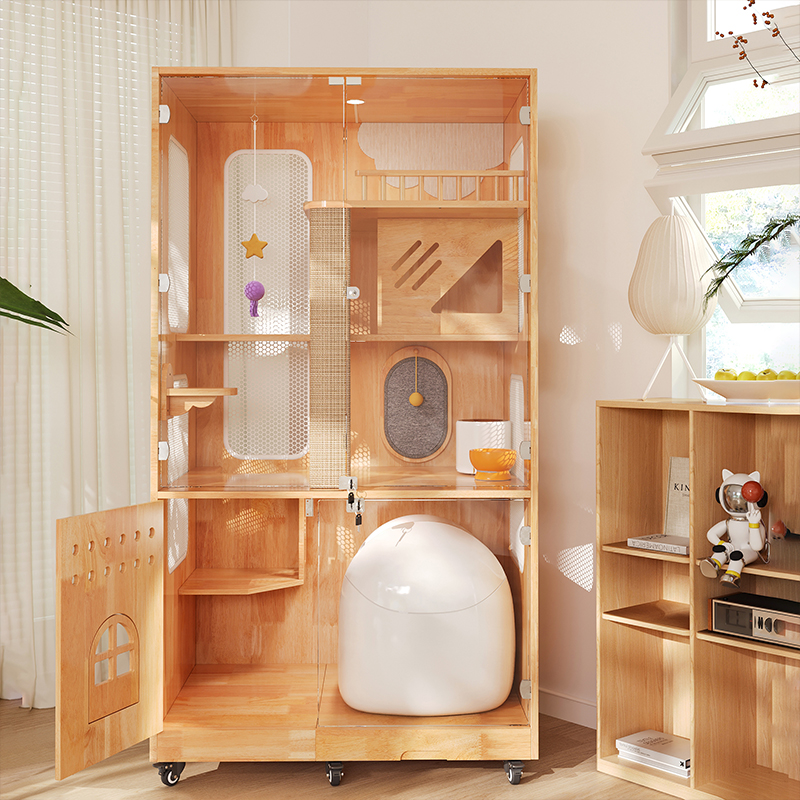
A premium enclosure needs a robust skeleton. The frame dictates both pet safety and furniture longevity. Materials are evaluated based on screw retention, moisture resistance, and overall weight density.
Solid rubberwood is the designated premium structural wood for high-end indoor pet furniture, tailored for commercial cat villa scenarios.
Pros: Solid rubberwood offers steady screw retention. It grips hardware tightly, preventing long-term wobbling. It carries a heavy base weight, which naturally prevents tipping. This proves critical for large breeds like Maine Coons or Savannah cats. Warm wood texture blends beautifully into high-end modern indoor home decor, perfectly matched with Yugie customized tempered glass visual design for unified home aesthetic.
Risks: Rubberwood comes with higher shipping weight than low-density board materials. It also dictates a premium price point for refined carpentry processing. Reasonable budget is required for this standardized premium craftsmanship.
Do not confuse high-grade cabinet multi-layer plywood with cheap particle board. Qualified multi-layer plywood features cross-grained real wood veneer pressed integrally with environmental adhesive.
Pros: It provides excellent structural stability. It resists warping effectively, even in humid indoor environments. It balances weight density and hardware retention performance, the core auxiliary structural material for all Yugie glass-series indoor cat villas and cat furniture.
All glass-connected bearing positions adopt customized thick-walled carbon steel brackets, as mandatory reinforcement parts for glass-wood combined cat furniture.
Pros: Metal frames fix tempered glass panels stably, avoid glass shaking or collision; integrated anti-rust spraying treatment adapts long-term indoor damp air; metal fittings cooperate with exclusive mortise-and-tenon wood craft to improve overall anti-impact and anti-toppling performance for wood-glass integrated pieces.
B-end procurement teams and cooperative pet brands must read official factory spec sheets carefully before bulk order procurement. Look for minimum base dimensions and bottom-heavy weight ratios. A well-engineered base ensures tipping resistance without requiring ugly wall anchors.
Pay close attention to these structural guidelines:
Material Type | Screw Retention | Moisture Resistance | Tipping Resistance (Weight) |
|---|---|---|---|
Standard MDF | Generally | Low (Swells easily) | Moderate |
Reinforced Multi-Layer Plywood | Excellent | High | High |
Solid Rubberwood | Superior | High (With sealed water-based finish) | Maximum |
Cats require appropriate places to scratch. It helps them shed dead claw husks and stretch their muscles. If the furniture lacks durable scratching zones, domestic felines will turn to high-value upholstered sofas and wooden home furnishings.
Choosing the right scratching surface determines component replacement frequency.
Sisal: Tightly woven natural sisal rope or heavy-duty sisal mats are the priority matching material for high-end cat furniture, with rigid fiber texture highly fitting cat scratching habits.
Jute: Natural kraft paper rope & jute rope are optional customized scratching materials for Yugie serialized products, with softer touch for picky cat groups, with moderate service cycle.
Carpet: Standard looped carpet traps claws. It encourages bad scratching habits. Low-grade glued carpet shall be avoided in premium cat villa design.
The attachment method matters deeply. Qualified premium models use tightly glued and mechanically fastened scratching zones. Heavy-duty staples or recessed anti-loose screws prevent fiber unraveling under long-term frequent use. All Yugie scratching components adopt dual fixing craft of glue plus hidden hardware, no pure glue bonding applied.
Cats spend countless hours resting inside cat enclosures. The lounging surfaces must balance comfort with extreme durability.
Evaluation Criteria: Look for tight-weave fabrics. Performance microfiber, heavy canvas, or specialized pet fabrics prevent claws from hooking. Looped fabrics allow sharp claws to penetrate and pull threads loose. Tight-weave options resist snags and maintain intact appearance longer.
Maintenance Requirement: Qualified luxury cat villa adopts fully removable, machine-washable cushion covers. Built-in, non-removable padding severely limits product service life. Detachable covers allow centralized batch washing for B-end inventory, eliminating residual dander and bacteria efficiently for retail sales.
Construction details matter just as much as raw materials. Cheap hardware ruins premium wood substrates. The assembly connection mode determines overall structural safety.
Premium designs use steel inserts and heavy-duty machine screws. Metal threading is embedded directly into solid wood or plywood substrates. Components are bolted together metal-to-metal. This creates an incredibly firm integrated bond.
Products using cheap wood screws drilled directly into board substrates shall be avoided. A durable structure supports repeated disassembly and reassembly for moving or cross-border transit. Ordinary wood screws will damage board holes after repeated disassembly, while Yugie customized embedded steel inserts and matched machine screws completely solve wobble risks after repeated reassembly and cross-border transit.
Enclosed cat villa spaces concentrate harmful volatile fumes. Cats stay inside enclosed condo areas up to sixteen hours per day for rest. Low-grade adhesive and surface coating will harm long-term cat physical health.
Low-quality engineered woods and synthetic carpets often release formaldehyde and other Volatile Organic Compounds (VOCs). Cats inhale chemical evaporants from adhesives and sealants during long-time staying, bringing chronic health hazards.
Premium cat furniture adopts water-based, non-toxic, pet-safe sealants. Low-VOC finished certification is the basic access standard for indoor pet furniture.
Cats conduct daily self-grooming behaviors. Cats lick paws after touching furniture surfaces, so surface coating residue may be ingested accidentally. All finishing materials must meet pet incidental ingestion safety standards.
Premium cat furniture is long-term investment instead of disposable daily goods. Standard modular design extends overall product service cycle effectively, avoiding whole-piece abandonment caused by partial component wear.
High-end pet furniture will not be discarded due to single damaged scratching post or cushion. Formalized premium brands support independent spare parts procurement, Yugie provides full-set original spare parts including exclusive sisal poles, fabric cushions, glass decorative parts and connecting hardware for global cooperative clients.
Standard modular bolted structure allows quick disassembly and replacement of worn components within minutes, maximizing the service life of solid wood and metal main frame.
Cats may suffer illness and cause indoor stains occasionally. Furniture surface materials must adapt to daily deep sanitization. Enzymatic cleaners are commonly used for urine and vomit stain removal. Yugie sealed solid rubberwood and polished tempered glass withstand repeated liquid cleaning without bleaching, warping or surface bubbling for long-term indoor use. Cleaning agents can be tested on inconspicuous areas first for daily maintenance.
B-end bulk buyers and brand operators can follow this standardized checklist before final order procurement to distinguish genuine premium products from marketing-oriented fast pet furniture:
Verify weight capacity: Ensure the frame safely supports active jumping from heavy cat breeds.
Check surface material configuration: Confirm solid rubberwood/tempered glass main structure, tight-weave snag-proof cushion fabrics.
Confirm replacement part availability: Cooperate with formal manufacturers with complete spare parts supply system.
Validate sealant safety: Confirm low-VOC or pet-safe water-based surface finishing for indoor use.
Finding the right balance between interior design and pet functionality requires careful research. Framework material performance and modular maintainability take priority over superficial appearance. Aesthetic styling enhances home matching effect, while structural engineering determines core product value.
Credible Luxury Cat Villa requires standardized production investment in solid rubberwood, high-strength tempered glass, carbon steel reinforcement and performance pet fabrics. Abandoning disposable fast furniture brings stable service performance enduring daily high-intensity cat activities. Qualified premium cat furniture is designed for long-term use, with main frame durability depending on material selection, structural design, usage intensity, and maintenance conditions. It helps maintain a refined interior presentation while supporting cats’ daily activity needs.
Product spec sheets should be reviewed carefully before procurement, including wood type, hardware specifications, finish options, replaceable parts, and warranty terms. Yugie can provide relevant manufacturer information, available safety documentation, patent information, and after-sales support details based on specific product models and project requirements.
Q: Are MDF luxury cat villas safe for heavy cats?
A: They pose prominent safety risks for large heavy breeds. MDF lacks stable screw retention and deforms easily under frequent jumping impact. Hardware will detach from loose board fibers after long-term use. For large breeds like Maine Coon, prioritize solid rubberwood or reinforced multi-layer plywood plus carbon steel reinforced structure to guarantee overall structural stability as much as possible.
Q: What materials are used in Yugie cat villas?
A: Most Yugie cat villas are constructed using solid rubberwood, multi-layer board (plywood), high-strength tempered glass, and carbon steel. These materials ensure long-lasting durability while allowing the villas to blend seamlessly with modern home interiors, making them ideal for high-end settings.
Q: What is the easiest material to clean on a luxury cat villa?
A: Low-VOC sealed solid rubberwood + edge-polished tempered glass deliver optimal cleaning efficiency. Water-based sealed wood and glass panels can be wiped directly with enzymatic cleaners. Detachable tight-weave microfiber cushion covers support machine washing. Glued fixed looped fabrics shall be avoided for long-term hygienic management.
Q: How long should a premium cat villa last?
A: The service life of a premium cat villa depends on material configuration, frame structure, usage frequency, cat size, and maintenance conditions. Modular designs with replaceable scratching parts can help extend the usable life of the product. Scratching components such as sisal, jute, or kraft paper parts may need periodic replacement depending on actual wear.
Q: Is sisal rope or sisal fabric better for scratching posts?
A: Both materials own qualified durability for daily scratching. Heavy-duty sisal fabric delivers stronger anti-shredding performance with texture closer to natural tree bark. Tightly wound natural sisal rope features lower replacement cost and convenient installation. Qualified premium products adopt mechanical fixing instead of pure glue bonding for all scratching surface assembly.
Q: Are Yugie glass-series cat furniture suitable for outdoor placement?
A: All Yugie solid wood & tempered glass integrated cat villas and cat furniture are exclusive indoor-use products. Outdoor sunlight corrosion, rain soaking and humidity will damage solid wood finish, loosen assembly structure and accelerate glass hardware aging, outdoor use is not recommended.


